
News DeskTechnologyCambridge Team Finds Possible Spear Wound in 75,000-Year-Old Neanderthal
Verified Curriculum CorpusPublished: Today
Technology·CEFR C1·Advanced

Neanderthal Skeleton Shows Possible Spear Wound and Signs of Care

Article Level ·●C1·Advanced
4 min read·247 words·Audio: 1:55
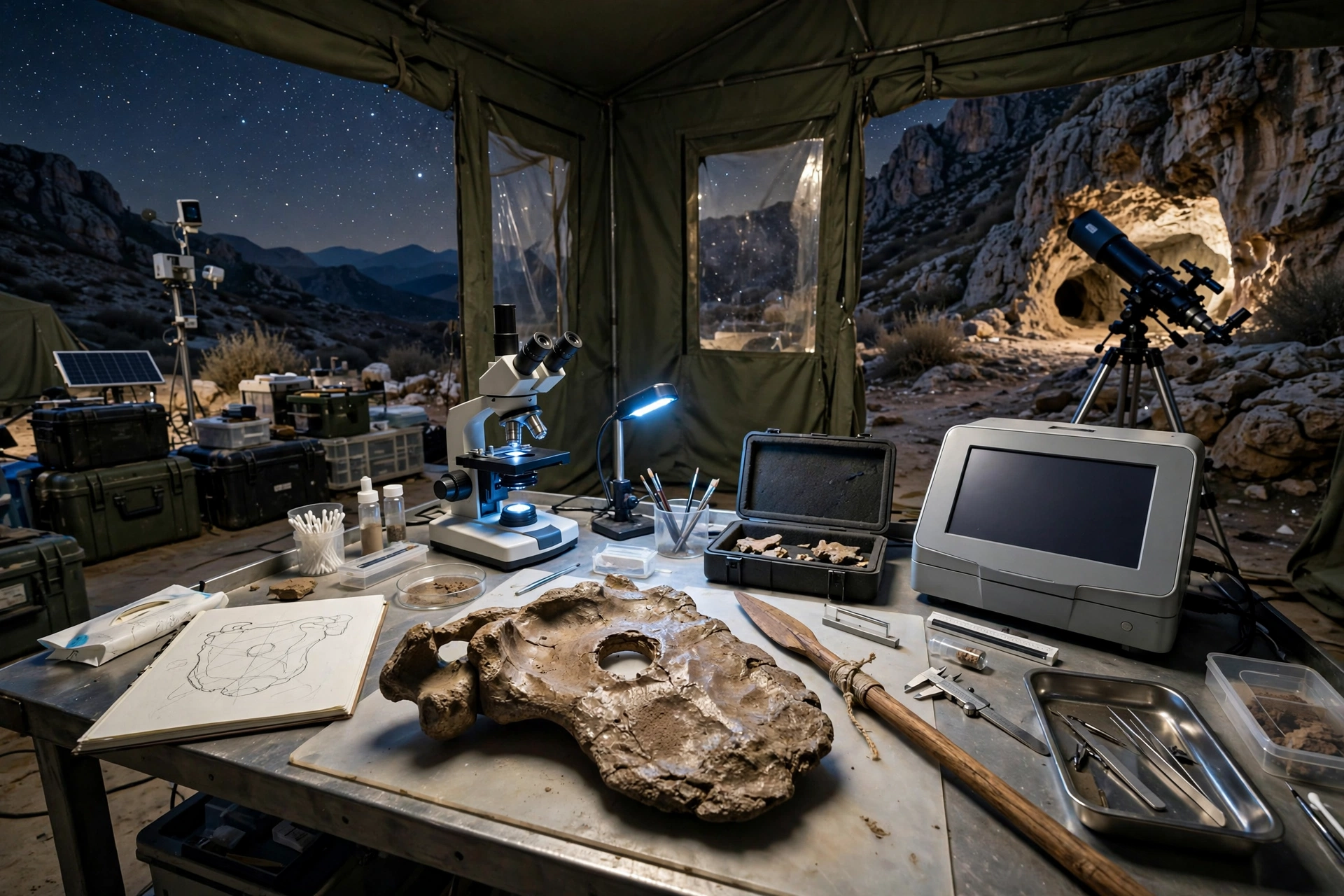
AI-generated illustration (not a photograph) of the setting of this story: Neanderthal Skeleton Shows Possible Spear Wound and Signs of Care
AI-generated with Meta Muse Image on OpenRouter · owned by newstoenglish
Studio Audio Available
Controls floating below ↓
Studio Narration
00:00
01:55

Lesson Overview & Key Takeaways

  • Story Summary: Researchers led by Cambridge archaeologist Emma Pomeroy say a circular opening in the left shoulder blade of a 75,000-year-old Neanderthal man from Shanidar Cave in Iraqi Kurdistan may match the shaft diameter of wooden spears, though they stress the exact cause of death remains uncertain.
  • CEFR Target: Level C1 (Advanced) — calibrated for clear sentence structure and targeted reading fluency.
  • Core Vocabulary: hypothesise, trauma, atypical, nurturing, deposited.
  • Skills Practised: Reading comprehension, dual-accent listening, and contextual grammar.
Reading PassageRead-along: word by word (UK)
100%
A Neanderthal skeleton reportedly offers a rare combination of evidence. The remains, identified as Shanidar A, belong to a man in his 40s who died roughly 75,000 years ago at Shanidar Cave in Iraqi Kurdistan. Researchers have that a circular hole in his left shoulder blade matches the shaft diameter of wooden spears. Examples of such spears have been found in Europe, dating between 200,000 and 400,000 years old. The round opening showed no signs of bone repair. Nearby fragments suggest the occurred at or near the moment of death. Emma Pomeroy of the University of Cambridge, who led the paper, described the specimen as displaying both behaviour and violence within one individual. The skeleton's teeth showed partial repair from a severe facial impact suffered during the man's life. Pomeroy said this injury would have been extremely painful and likely required group assistance with eating and drinking. The body was positioned behind a large boulder separating it from the cave entrance. Remains of at least four additional Neanderthals were on top over years or decades afterward. Australian National University archaeologist Sofia Samper Carro, not involved in the discovery, said the cause-of-death conclusion was too strong given the available evidence. She agreed the fracture pattern is compared to normal linear bone breaks but argued the leap to a specific cause was without recovering the actual weapon. Pomeroy noted that the wood did not survive, so certainty about the spear hypothesis remains impossible.

Study this lesson

Activities for CEFR C1, all based on the story above.

1. Grammar focus

One structure from the story, explained, with sentences taken from the text.

Hedging and distancing

reportedly / is thought to / appears to / is expected to + verb

Hedging language (reportedly, is thought to, appears to) lets a writer report information without vouching for it. It marks the difference between established fact and claim or expectation.

From the story
  • A Neanderthal skeleton reportedly offers a rare combination of evidence.

Notice: What does the writer avoid stating as a certain fact?

2. Vocabulary

Useful words and phrases from the story, with meanings and examples.

Words from the story

6 Target Terms
hypothesise/haɪˈpɒθəsaɪz/
verb · C1

To propose a possible explanation for something based on limited evidence, without having proved it yet.

“Scientists hypothesise that certain deep-sea creatures survive without sunlight by feeding on chemical energy.”

Often with: hypothesise a cause, widely hypothesised, hypothesised that

trauma/ˈtrɔːmə/
noun · C1

A serious physical injury or wound, or the state of being injured in this way.

“The patient's trauma was so severe that surgeons had to perform emergency operations within minutes of arrival.”

Often with: severe trauma, physical trauma, cause trauma

atypical/eɪˈtɪpɪkl/
adjective · C1

Not representing the usual or expected pattern; unusual compared with what is normal.

“The doctor noted that the bone fracture was atypical in shape, which suggested it was caused by something other than an ordinary fall.”

Often with: atypical pattern, highly atypical, atypical compared to

nurturing/ˈnɜːtʃərɪŋ/
adjective · C1

Showing care, support, and attention to someone who needs help or protection.

“The documentary highlighted the nurturing behaviour of elephant matriarchs toward orphaned calves in the herd.”

Often with: nurturing behaviour, nurturing environment, deeply nurturing

deposited/dɪˈpɒzɪtɪd/
verb · C1

Placed or put down in a particular location, often over a period of time or in layers.

“Sediment was deposited at the river mouth over thousands of years, gradually forming a new delta.”

Often with: deposited on top, carefully deposited, deposited over time

unsupported/ˌʌnsəˈpɔːtɪd/
adjective · C1

Not backed up or justified by evidence; lacking the proof or support needed to make it credible.

“The committee rejected the proposal as unsupported, noting that no data had been provided to validate the claims.”

Often with: unsupported claim, remain unsupported, largely unsupported

3. Check your understanding

Questions about the story. Answer first; each question explains the answer.

Reading Comprehension

Fact Verification
Passage

A Neanderthal skeleton reportedly offers a rare combination of evidence. The remains, identified as Shanidar A, belong to a man in his 40s who died roughly 75,000 years ago at Shanidar Cave in Iraqi Kurdistan. Researchers have hypothesised that a circular hole in his left shoulder blade matches the shaft diameter of wooden spears. Examples of such spears have been found in Europe, dating between 200,000 and 400,000 years old. The round opening showed no signs of bone repair. Nearby fragments suggest the trauma occurred at or near the moment of death. Emma Pomeroy of the University of Cambridge, who led the paper, described the specimen as displaying both nurturing behaviour and violence within one individual. The skeleton's teeth showed partial repair from a severe facial impact suffered during the man's life. Pomeroy said this injury would have been extremely painful and likely required group assistance with eating and drinking. The body was positioned behind a large boulder separating it from the cave entrance. Remains of at least four additional Neanderthals were deposited on top over years or decades afterward. Australian National University archaeologist Sofia Samper Carro, not involved in the discovery, said the cause-of-death conclusion was too strong given the available evidence. She agreed the fracture pattern is atypical compared to normal linear bone breaks but argued the leap to a specific cause was unsupported without recovering the actual weapon. Pomeroy noted that the wood did not survive, so certainty about the spear hypothesis remains impossible.

1. What is the primary function of the word 'reportedly' in the opening sentence?
2. Why does the text mention that Samper Carro was 'not involved in the discovery'?
3. What can be inferred about Pomeroy's stance on the spear hypothesis from the final sentence?

Short-Answer Comprehension

Precision Recall

Answer the prompt in a concise phrase or sentence. Your answer will be checked against stored accepted answers, and you can compare your wording with the authentic editorial model response.

4. Practice

Activities with instant feedback. Try each one before you look at the answer key.

Contextual Syntax Drill

Grammar & Tenses

Fill in each blank with the grammatically correct passive or active form of the verb indicated in parentheses.

1. Researchers havethat a circular hole in the shoulder blade matches the shaft diameter of wooden spears.(present perfect, reporting a tentative explanation)
2. The bodybehind a large boulder separating it from the cave entrance.(past simple passive, describing a deliberate placement)
3. She agreed the fracture pattern is atypical compared to normal linear bone breaks but argued the leap to a specific causewithout recovering the actual weapon.(past simple negative, expressing that a claim lacks backing)
4. Pomeroy noted that the wood did not survive, so certainty about the spear hypothesisgiven the available evidence.(present simple with 'impossible', expressing a continuing limitation)

Lexical Matching Drill

Vocabulary in Context

Select the matching definition for each target news term extracted from the report.

hypothesise
trauma
atypical
nurturing
unsupported

5. Write or speak

A short task in your own words.

Editorial Discussion & Reflection

Spoken & Written Reasoning

Formulate your opinion on these real-world questions. Take brief notes or practice answering out loud.

1. The article describes a single skeleton as showing both 'nurturing behaviour and violence within one individual.' Why might this combination be considered rare and significant for understanding Neanderthal social life?
2. Samper Carro says the fracture is atypical but that the cause-of-death conclusion is unsupported. Where exactly do you think the boundary lies between a reasonable scientific hypothesis and an overclaim, and how does this example illustrate it?
3. Pomeroy herself states that certainty about the spear hypothesis remains impossible. Does this admission strengthen or weaken the overall paper, and why might it matter for how readers assess scientific news reports?

Answer key and explanations

Try the activities first: you learn more by checking your own answers. Then compare.

Frequently Asked Questions About This Lesson

What English proficiency level is this news lesson?

This lesson is calibrated to CEFR C1 (Advanced). It features 247 words adapted from verified journalism, offering an accessible yet authentic challenge for learners.

Does this lesson provide audio pronunciation?

Yes, this lesson includes studio narration in both British (UK) and American (US) accents with real-time word highlighting to improve your listening and pronunciation.

How can I practice with this article?

Read the article at your own pace, listen to the aligned narration, explore highlighted vocabulary definitions in the text margins, and test your understanding with the interactive exercises below the story.