News DeskTechnologyResidents Link Cancer Rise to 2,600 Fracking Wells in Patagonia
Verified Curriculum CorpusPublished: Today
Technology·CEFR C2·Mastery

Patagonia's 2,600 Wells Cast a Shadow Over Allen's Calle Ciega 10

Article Level ·●C2·Mastery
4 min read·255 words·Audio: 2:17
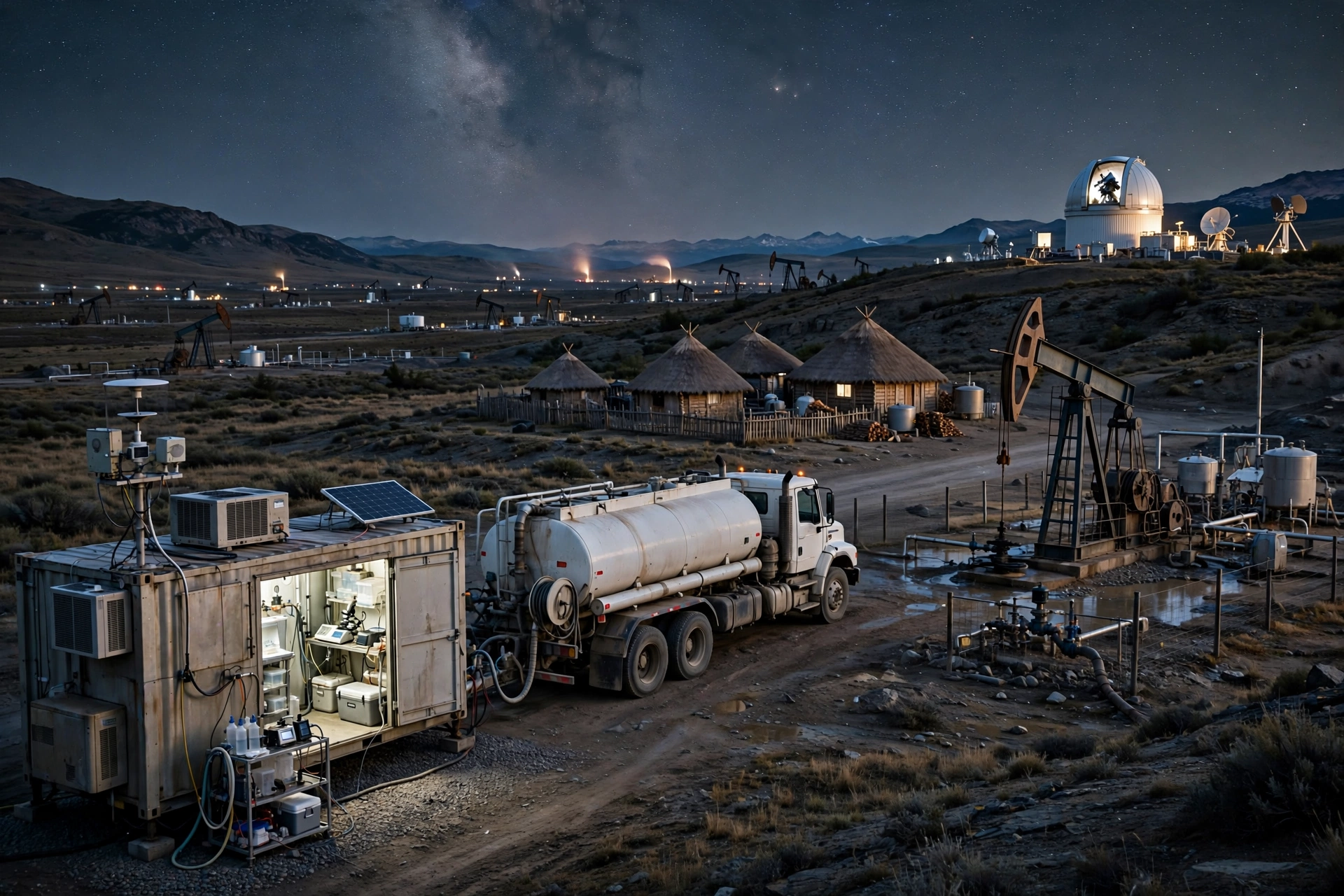
AI-generated illustration (not a photograph) of the setting of this story: Patagonia's 2,600 Wells Cast a Shadow Over Allen's Calle Ciega 10
AI-generated with Meta Muse Image on OpenRouter · owned by newstoenglish
Studio Audio Available
Controls floating below ↓
Studio Narration
00:00
02:17

Lesson Overview & Key Takeaways

  • Story Summary: In the town of Allen, Argentine Patagonia, families on Calle Ciega 10 say cancers, pregnancy losses and congenital defects have surged since drilling began roughly 13 years ago. Vaca Muerta holds the world's second-largest shale gas reserve and fourth-largest shale oil reserve, with more than 2,600 active wells now operating across the region.
  • CEFR Target: Level C2 (Mastery) — calibrated for clear sentence structure and targeted reading fluency.
  • Core Vocabulary: fiercely contested, congenital disabilities, hydraulic fracturing, unconventional, coinciding with.
  • Skills Practised: Reading comprehension, dual-accent listening, and contextual grammar.
Reading PassageRead-along: word by word (UK)
100%
More than 2,600 active wells tap the Vaca Muerta formation in Argentine Patagonia, the world's second-largest shale gas reserve and fourth-largest shale oil reserve, yet the human cost of that extraction remains by those who live beside it.
Residents of Calle Ciega 10 in the town of Allen trace a dramatic rise in illnesses—cancers, pregnancy losses—back roughly thirteen years, the onset of nearby drilling operations. The Saldías family alone recount a son born with three lungs in 2020, a daughter severe skin patches in 2019, and stroke-like symptoms during a pregnancy in 2023.
Scientific research has connected to respiratory and skin problems, cancer, and complications in pregnancy among nearby residents. Mapuche communities including the Nawel family in the Zonal Xawvn Ko confederation and the Añelo Lof Campo Maripe community report high rates of miscarriage, respiratory disorders, skin ailments, and several cancer cases, while also noting deformed or stillborn livestock.
The government of Cristina Kirchner introduced shale extraction to the area in 2012, and the current administration under Javier Milei depends on those resources for economic recovery while welcoming foreign investment for hydrocarbon production and export. By late 2025, Argentina recorded an all-time production high, with petroleum surpassing soya bean meal for the first time as the country's top export product.
According to the NGO OpSur, YPF manages thirty-three percent of the gas and thirty-nine percent of the oil in the region, with remaining output belonging to companies such as Chevron, TotalEnergies, and Shell.
Study this lesson

Activities for CEFR C2, all based on the story above.

1. Vocabulary

Useful words and phrases from the story, with meanings and examples.

Words from the story

6 Target Terms
fiercely contested/ˈfɪəsli kənˈtestɪd/
noun · C2

Used to describe a claim, right, or narrative that is challenged or disputed with great intensity by opposing parties.

“The historical account of the treaty's boundaries remains fiercely contested by both nations involved.”

Often with: remains fiercely contested, fiercely contested territory, fiercely contested narrative

congenital disabilities/kənˈdʒenɪtəl ˌdɪsəˈbɪlɪtiz/
noun · C2

Physical or developmental conditions present at birth, typically caused by genetic or environmental factors during pregnancy.

“Public health campaigns in the region now routinely screen pregnant women to identify potential congenital disabilities early.”

Often with: link to congenital disabilities, rates of congenital disabilities, screen for congenital disabilities

hydraulic fracturing/haɪˈdrɔːlɪk frækˈtʃərɪŋ/
noun · C2

A drilling technique in which fluid under extreme pressure is injected into rock to create fractures and release trapped gas or oil; commonly abbreviated as 'fracking'.

“Regulators in several European countries have placed strict moratoriums on hydraulic fracturing due to concerns over groundwater contamination.”

Often with: hydraulic fracturing operations, linked to hydraulic fracturing, restrictions on hydraulic fracturing

unconventional/ˌʌnkənˈvɛnʃənəl/
adjective · C2

Not conforming to established methods or norms; in energy contexts, referring to hydrocarbon resources extracted through non-traditional techniques rather than conventional drilling.

“The firm's unconventional strategy of targeting deep-sea methane hydrates has drawn both investor enthusiasm and environmental scrutiny.”

Often with: unconventional gas, unconventional oil, unconventional resources

coinciding with/kəʊɪnˈsaɪdɪŋ wɪð/
noun · C2

Happening at the same time as something else; often used to imply a possible causal link without explicitly stating one.

“The sudden drop in consumer confidence, coinciding with the announcement of new tariffs, prompted several recessions fears among analysts.”

Often with: rise coinciding with, coinciding with the onset of, coinciding with the introduction of

afflicted by/əˈflɪktɪd baɪ/
noun · C2

Suffering from a disease, condition, or hardship, especially one that is severe, prolonged, or particularly distressing.

“The coastal communities, long afflicted by recurrent flooding, finally secured government funding for permanent drainage infrastructure.”

Often with: afflicted by a disease, severely afflicted by, afflicted by poverty

2. Check your understanding

Questions about the story. Answer first; each question explains the answer.

Reading Comprehension

Fact Verification
Passage

More than 2,600 active wells tap the Vaca Muerta formation in Argentine Patagonia, the world's second-largest shale gas reserve and fourth-largest shale oil reserve, yet the human cost of that extraction remains fiercely contested by those who live beside it. Residents of Calle Ciega 10 in the town of Allen trace a dramatic rise in illnesses—cancers, pregnancy losses—back roughly thirteen years, coinciding with the onset of nearby drilling operations. The Saldías family alone recount a son born with three lungs in 2020, a daughter afflicted by severe skin patches in 2019, and stroke-like symptoms during a pregnancy in 2023. Scientific research has connected hydraulic fracturing to respiratory and skin problems, cancer, congenital disabilities, and complications in pregnancy among nearby residents. Mapuche communities including the Nawel family in the Zonal Xawvn Ko confederation and the Añelo Lof Campo Maripe community report high rates of miscarriage, respiratory disorders, skin ailments, and several cancer cases, while also noting deformed or stillborn livestock. The government of Cristina Kirchner introduced shale extraction to the area in 2012, and the current administration under Javier Milei depends on those resources for economic recovery while welcoming foreign investment for hydrocarbon production and export. By late 2025, Argentina recorded an all-time production high, with petroleum surpassing soya bean meal for the first time as the country's top export product. According to the NGO OpSur, YPF manages thirty-three percent of the unconventional gas and thirty-nine percent of the unconventional oil in the region, with remaining output belonging to companies such as Chevron, TotalEnergies, and Shell.

1. What rhetorical function does the word 'yet' serve in the opening sentence?
2. Why does the author use the verb 'trace' rather than 'attribute' when describing how residents link their illnesses to drilling?
3. Which of the following best characterises the relationship between the fourth paragraph (government policy and production) and the second and third paragraphs (health effects)?

Short-Answer Comprehension

Precision Recall

Answer the prompt in a concise phrase or sentence. Your answer will be checked against stored accepted answers, and you can compare your wording with the authentic editorial model response.

3. Practice

Activities with instant feedback. Try each one before you look at the answer key.

Contextual Syntax Drill

Grammar & Tenses

Fill in each blank with the grammatically correct passive or active form of the verb indicated in parentheses.

1. More than 2,600 active wellsthe Vaca Muerta formation in Argentine Patagonia.(present simple, reporting an ongoing fact)
2. Residents of Calle Ciega 10a dramatic rise in illnesses back roughly thirteen years.(present simple, reporting a habitual/ongoing claim)
3. Scientific researchhydraulic fracturing to respiratory and skin problems, cancer, and congenital disabilities.(present perfect, emphasising relevance to the present)
4. The government of Cristina Kirchnershale extraction to the area in 2012.(past simple, completed action at a stated time)

4. Write or speak

A short task in your own words.

Editorial Discussion & Reflection

Spoken & Written Reasoning

Formulate your opinion on these real-world questions. Take brief notes or practice answering out loud.

1. The text uses 'coinciding with' rather than 'caused by' when describing residents' illnesses relative to drilling. Is this distinction journalistically necessary, or does it subtly weaken the communities' position?
2. Argentina's government depends on unconventional hydrocarbons for economic recovery while scientific research links hydraulic fracturing to serious health outcomes. In your view, should economic necessity ever justify accepting what residents describe as a 'fiercely contested' human cost?
3. The article presents anecdotal family accounts (the Saldías, Nawel) alongside institutional data (OpSur, production figures). Which form of evidence carries more weight in public discourse, and why?

Answer key and explanations

Try the activities first: you learn more by checking your own answers. Then compare.

Frequently Asked Questions About This Lesson

What English proficiency level is this news lesson?

This lesson is calibrated to CEFR C2 (Mastery). It features 255 words adapted from verified journalism, offering an accessible yet authentic challenge for learners.

Does this lesson provide audio pronunciation?

Yes, this lesson includes studio narration in both British (UK) and American (US) accents with real-time word highlighting to improve your listening and pronunciation.

How can I practice with this article?

Read the article at your own pace, listen to the aligned narration, explore highlighted vocabulary definitions in the text margins, and test your understanding with the interactive exercises below the story.